
Open the album · Begin a story
Your first banknotes.Let curiosity lead.
Banknote collecting for beginners starts with a subject you enjoy. Choose a note, learn its story and give the next album page a purpose.
Explore three starter routes →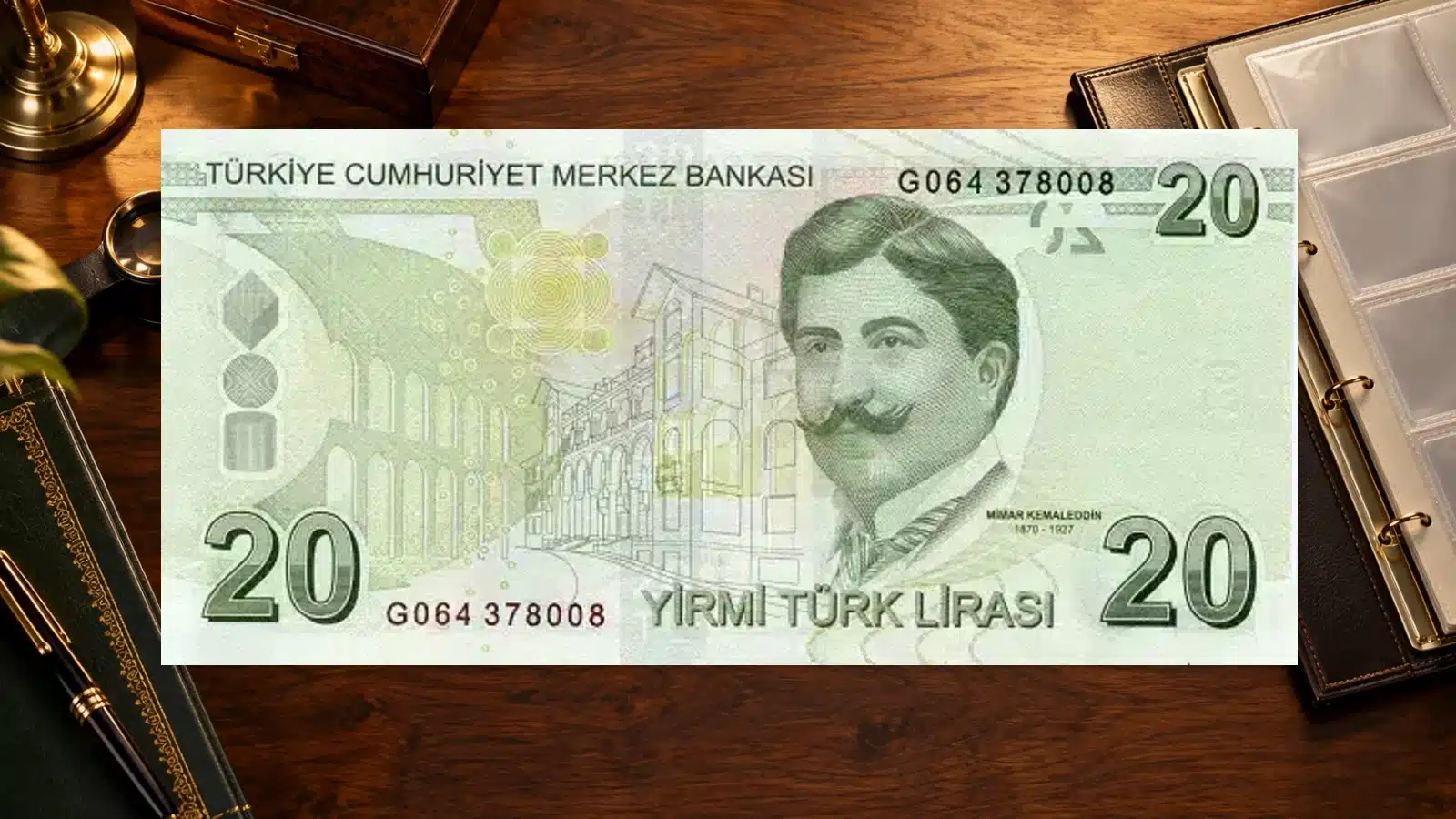
A strong first collection is not the one with the most notes. It is the one that makes you want to look closer.
01 / Give the album a direction
Start with one question you enjoy.
Banknote collecting for beginners becomes much easier when the first goal is specific. You might enjoy the designs of one country, architectural subjects, a change of currency, or the different denominations of one series. Choose one of those ideas before choosing a large assortment.
Write a simple collection statement: “I want one example of each stated denomination in this series”, or “I want three notes that show the change from old Turkish lira to YTL and later lira”. The statement tells you what belongs in the album and what can wait.
Set a comfortable spending limit that includes postage and suitable storage. Leave room to research an unfamiliar note before buying. There is no required starting denomination, and the size of the printed number does not measure rarity or collecting importance.

Look closer · Architecture
One building. A new direction.
The reverse of this Iraqi 250-dinar note turns a country study into an architectural theme. Record what you can verify, then compare the other side.
02 / Choose the format
A single note or a banknote set?
A single note offers control: you choose the design or variety that interests you and study it closely. A denomination set offers an organized group in one purchase. A lot may repeat a denomination, which can be useful for comparison but may not help fill gaps in a type collection.
| Format | Best use | Check first |
|---|---|---|
| Single note | One design, a missing value or a specific variety. | Exact issue, condition and whether the photo is representative. |
| Denomination set | An organized group of different stated values. | Every included denomination; what “complete” actually covers. |
| Repeated-note lot | Comparing examples, serials or condition. | Quantity, repeated values and whether serials are specified. |
Before ordering a set, list its contents beside what you already own. This simple comparison avoids unplanned duplicates. If the seller says dates or signatures vary, ask whether that matters for your intended project. Never assume a multi-note lot contains consecutive serial numbers unless explicitly stated.
Complete within a defined scope.
A set may be complete for the listed denominations without containing every year, signature or catalog variety. Keep the seller’s definition of the set with your collection record.
03 / Three practical starting points
Choose the route that fits your curiosity.
Route 1 / A compact country set
The Iraq three-note set lists 250, 500 and 1,000 dinars. Use a compact group to practice reading denominations, comparing both sides and documenting condition.
Route 2 / A denomination sequence
The Turkish six-note set lists 5, 10, 20, 50, 100 and 200 lira. A defined denomination run gives the album a clear structure.
Route 3 / A focused Iran project. Compare the contents of the Iran ten-note set with a single design that interests you, such as the five-million-rial Iran Cheque. Choose by the actual listed contents and your theme, rather than assuming more notes always make the better start.
Turn the note over · Portraits
The story on the reverse.
Mimar Kemaleddin appears on this Turkish 20-lira reverse. A portrait or building can become the thread that connects your next album page.
This is one study example; check the listing for the full set contents.

These are alternative projects, not a single mixed starter package. Prices and availability belong on the live product pages, where you can compare what is currently supplied. The original photographs in this guide are examples for study, not a promise of matching serials.
04 / Learn the language
Condition, identification and a useful record.
Start with the distinction between identity and condition. Country, denomination, issue, design and catalog attribution identify the note. A grade describes its physical state. UNC is not a year, a guarantee of rarity or an automatic independent certification.
Use our banknote grading guide to understand UNC, XF and VF descriptions. Ask about folds, corner wear, stains, writing, repairs and any treatment. An attractive front photograph should be supported by a reverse view and clear edges.
Your first collection record
- Identification: country, issuing authority, denomination and the issue or date you have actually verified.
- Reference: catalog and variety where established; leave an uncertain attribution open rather than guessing.
- Individual details: serial and prefix when useful, plus front and reverse photographs.
- Condition: seller’s stated grade and your observations of wear or damage.
- Purchase: source, acquisition date, amount paid and a copy of the item description.
A simple notebook or spreadsheet is enough to begin. The important habit is keeping evidence with the note. That record makes later comparisons easier and helps you recognize which examples are missing from your chosen scope.
05 / Preserve what you learn
Handle less. Store thoughtfully.
Prepare a clean, dry surface before opening the package. Handle notes with clean, dry hands, support the paper and avoid unnecessary contact with the printed surfaces. Keep food, drink, adhesives and writing tools away from the work area.
Choose holders intended for long-term banknote storage, with clear material specifications. Avoid soft PVC or unknown plastics, direct sunlight, damp conditions and excessive heat. Use a holder large enough for the full note without forcing its corners. Keep labels outside the holder and never attach tape or adhesive labels to the banknote.
For study
Photograph both sides in even light. Keep image edits limited to faithful presentation; do not create artificial security effects or alter the note’s visible details.
For storage
Keep the album flat and protected, with the notes supported and no excessive pressure. Check the storage area periodically for moisture or changes in the holders.
Do not wash, iron, press or attempt to repair a note to improve its appearance. If an example needs conservation advice, seek an appropriate specialist before intervening. Learning to preserve the paper is part of the hobby, just as learning to identify it is.
06 / Before your first purchase
Questions new collectors ask.
Should a beginner buy only UNC notes?
No single grade is compulsory. UNC can provide clear modern design examples, while circulated notes may fit a historical project. Choose with the condition and price fully understood.
Are repeated notes a mistake?
Only if they do not fit your goal. Repeats can support a serial or variety study. For a denomination set, compare your inventory before ordering.
Do I need expensive equipment?
Begin with useful references, good light, suitable storage and clear photographs. Add specialist equipment when a specific examination task requires it.
Where should I go after the first set?
Review what interested you most: design, history, signatures, denomination changes or security technology. Let that observation define the next small project.
Further reading & image notes
The IBNS Introduction to Banknotes and Banknote Collecting is a useful route into terminology, identification and collecting approaches. Explore our Iraqi dinar authentication guide for an example of issue-specific physical examination.
Product examples link to their individual descriptions; always check current contents and availability. Original site currency photographs only. Editorial review: 22 October 2026.