

Why collectors choose this banknote
- 1998 issue
- UNC condition
- Authentic collector banknote
- Worldwide protected shipping
- Easy addition to an existing collection
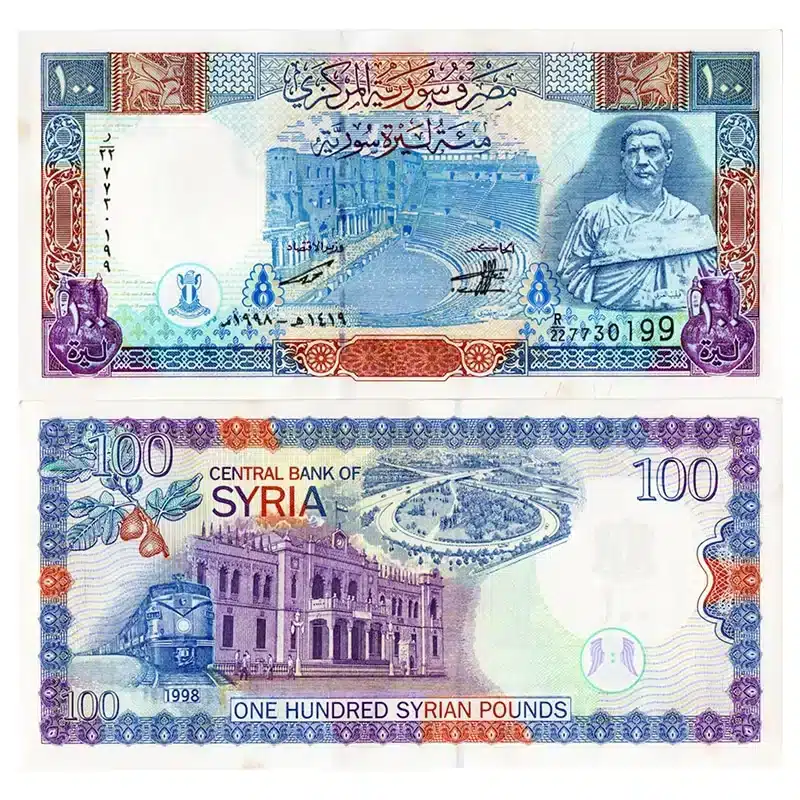
The Syria 100 Pounds 1998 banknote occupies the second position in the P#107–P#111 sequence and introduces a distinctly different combination of subjects from the preceding 50 Pounds issue. Catalogued as Pick P#108, this UNC banknote connects the archaeological heritage of Bosra with the development of railway transport in Syria.
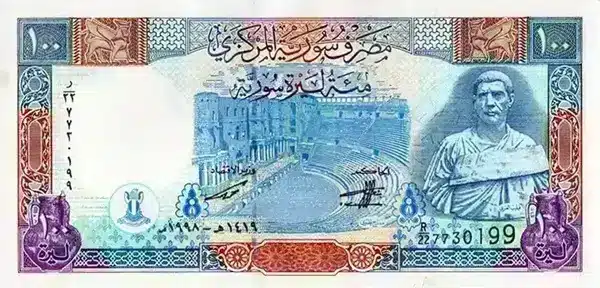
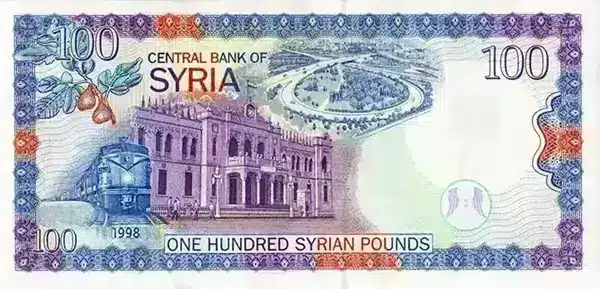
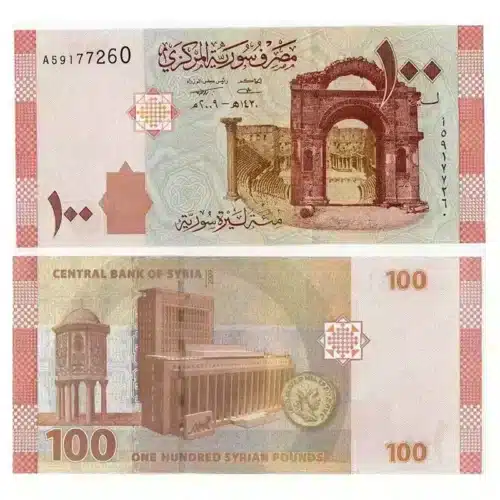
On the front, the Roman Theatre at Bosra establishes the ancient architectural theme, while a bust of Roman Emperor Marcus Julius Philippus, better known as Philip the Arab, adds a direct link to the Roman period. In contrast, the reverse moves forward in time through the Hejaz Railway, combining a steam locomotive with the historic railway station in Damascus.
Collector’s Snapshot
Banknote Specifications
Explore additional regional issues in our Middle East banknotes collection.
Front Design | Roman Theatre at Bosra & Philip the Arab
Roman Theatre at Bosra
The front prominently features the Roman Theatre at Bosra, one of the most recognizable archaeological monuments associated with ancient Syria. Its monumental stone architecture gives the 100 Pounds note a strong archaeological identity and clearly separates P#108 from the architectural subjects used on P#107.
Moreover, the theatre connects this denomination with Bosra’s Roman-era heritage. Consequently, collectors interested in archaeological subjects on world banknotes receive a clearly identifiable historical landmark rather than a generic architectural scene.
Emperor Philip the Arab
Alongside the theatre appears a bust of Roman Emperor Marcus Julius Philippus, commonly known as Philip the Arab. The portrait introduces a human historical subject while remaining directly connected to the Roman theme of the front.
Therefore, the combination of the emperor and the Bosra Theatre creates a coherent archaeological composition. Instead of presenting unrelated monuments, the design uses both architecture and portraiture to establish a recognizable connection with Roman Syria.
Reverse Design | Hejaz Railway & Damascus Station
Hejaz Railway Locomotive
The reverse moves away from antiquity and introduces a transport-history theme through a Hejaz Railway steam locomotive. This subject creates a strong chronological contrast with the Roman imagery shown on the opposite side.
Furthermore, railway subjects have a distinct place within thematic banknote collecting. As a result, P#108 can appeal not only to collectors of Syrian paper money but also to collectors interested in trains, transportation, and historic infrastructure.
Hejaz Railway Station in Damascus
The locomotive is paired with the historic Hejaz Railway Station in Damascus, also associated with the Kanawat area of the city. Together, the station and locomotive form a complete railway composition rather than presenting transport equipment without geographical context.
Accordingly, the reverse connects an important transport system with Damascus itself. This gives collectors a useful visual contrast between ancient Bosra on the front and the transport history of Damascus on the back.
Printing & Security Features
- Watermark: Horse head visible when the banknote is viewed against transmitted light.
- Material: Traditional security paper used for this 1998 Syrian issue.
- Arabic Front: The obverse carries Arabic inscriptions identifying the Central Bank of Syria and the 100 Pounds denomination.
- English Reverse: The reverse includes Central Bank of Syria and One Hundred Syrian Pounds inscriptions in Latin script.
- Date: The banknote displays 1419 AH alongside 1998 AD.
- Dimensions: Approximately 155 × 75 mm.
Collector Intelligence
From Archaeology to Railway History
P#108 has a particularly clear thematic structure. The front concentrates on Roman-era Syria through Bosra and Philip the Arab. By comparison, the reverse introduces railway development through the Hejaz Railway.
This contrast gives the banknote more than one collecting angle. For example, it can fit a Syrian type collection, an archaeology-themed collection, a Roman-history group, or a specialized collection of banknotes depicting trains and railway infrastructure.
Why the 100 Pounds Note Matters in the Series
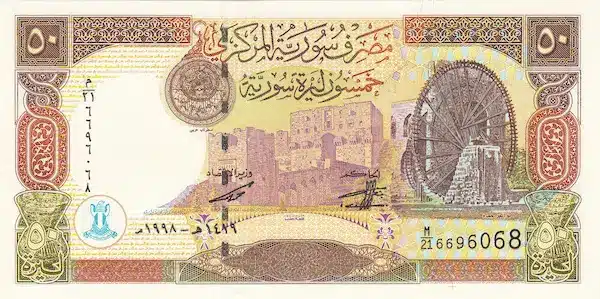
Within the P#107–P#111 sequence, the 100 Pounds denomination follows directly after the 50 Pounds P#107. However, its imagery changes significantly.
While the previous denomination emphasizes Aleppo, Hama, science, and education, P#108 shifts toward Bosra, Roman history, and the Hejaz Railway. Therefore, placing the two notes together demonstrates how this Syrian series changes subject matter from one denomination to the next.
Collection Position | Second Note in the P#107–P#111 Sequence
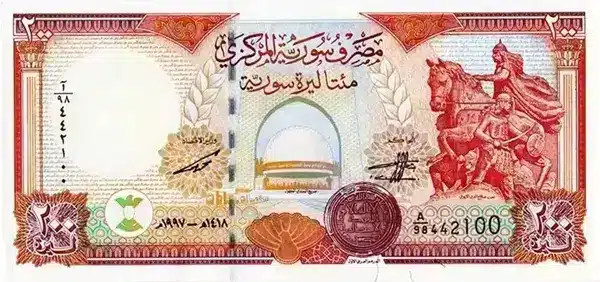
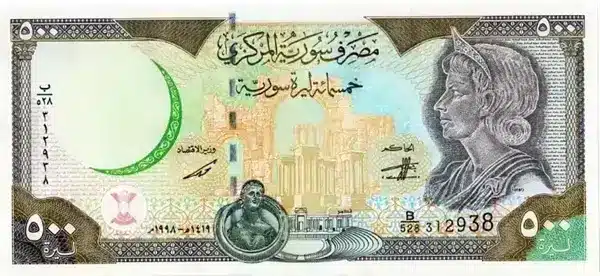
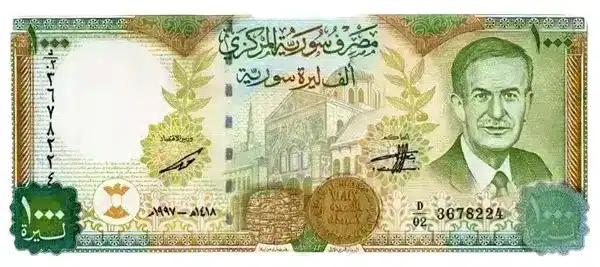
The Syria 100 Pounds P#108 occupies the second position in the five-note sequence we are building.
After beginning with the 50 Pounds P#107, collectors can add this denomination to continue the Pick sequence in numerical order. The higher P#109, P#110, and P#111 denominations can then extend the same collection.
Consequently, P#108 works especially well beside P#107 because the two notes maintain the same broader series identity while introducing substantially different visual subjects.
Collector Checklist
- Pick P#108: Second catalogue reference in the P#107–P#111 sequence.
- 1998 issue: A clearly dated Syrian banknote from this earlier series.
- Bosra Theatre: Strong archaeological landmark on the front.
- Philip the Arab: Roman historical subject adds a distinctive portrait element.
- Hejaz Railway: Locomotive and Damascus station create a dedicated transport theme.
- UNC condition: Suitable for organized album display and archival storage.
Collector Decision | Why Add P#108?
Collectors building the complete P#107–P#111 sequence need P#108 to continue directly from the 50 Pounds denomination. However, this note also works independently because its imagery is unusually focused.
For archaeological collectors, the Roman Theatre at Bosra and Philip the Arab provide the primary attraction. Meanwhile, railway collectors may find the reverse particularly interesting because both the locomotive and Damascus station appear within the same design.
Therefore, P#108 can serve either as the second piece of an organized Syrian sequence or as a standalone thematic banknote.
Archival Storage Recommendations
- Use archival protection: Store the banknote inside an acid-free, PVC-free currency sleeve.
- Handle carefully: Hold the note by its edges with clean and dry hands.
- Protect the print: Keep it away from prolonged direct sunlight.
- Control humidity: Choose a dry and stable storage environment.
- Organize by Pick number: Place P#108 immediately after P#107 when building the complete sequence.
- Preserve UNC quality: Finally, avoid folding, laminating, taping, or writing on the banknote.
Collector Takeaway
Syria P#108 connects the Roman heritage of Bosra and Philip the Arab with the Hejaz Railway and historic Damascus station, creating a distinctive second chapter in the P#107–P#111 Syrian banknote sequence.
Secure Payment & Worldwide Shipping
- Preparation: Orders are normally prepared within 1–3 business days.
- Protection: The banknote is carefully protected before shipment.
- Serial Notice: Serial number, prefix, and signature may differ from the photographed example.
- Combined Shipping: In addition, combined shipping is available when purchasing multiple Syrian or world banknotes.
Continue the P#107–P#111 Syrian Series
Browse our Middle East banknotes collection for additional Syrian and regional paper money.
Collectors building this earlier Syrian sequence can place the 100 Pounds P#108 directly after the 50 Pounds P#107 before continuing with P#109, P#110, and P#111.
Add this Syria 100 Pounds 1998 P#108 UNC banknote to your collection as the second denomination in the P#107–P#111 Syrian series.
Compare this issue, another edition, or a complete set
Review the closest catalogue variants, collection sets, and denomination options without starting a new search.
Use these options to fill a missing issue or complete more of the series in fewer purchases.
Reviews
There are no reviews yet